
Welcome to AdBrill's Blog
Harnessing the Power of Biogas: A Comprehensive Guide to Production from Organic Waste
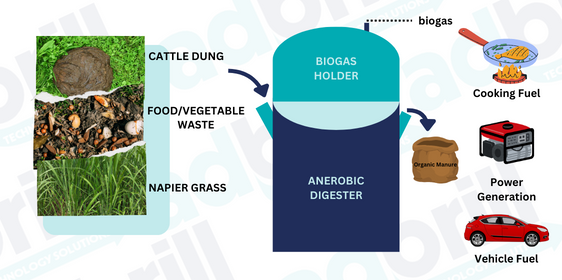

In recent years, the need for sustainable energy sources has become increasingly urgent. One such source that has gained traction is biogas, a renewable energy produced through the anaerobic digestion of organic matter. This process not only produces energy but also helps in waste management by converting organic waste into a valuable resource.
The Process of Biogas Production from Organic Waste
Biogas production begins with the collection of organic waste, which can include food scraps, agricultural residues, and animal manure. This waste is then fed into a digester, where it undergoes anaerobic digestion, a process where microorganisms break down the organic matter in the absence of oxygen. This digestion process produces biogas, which is primarily composed of methane and carbon dioxide.
Benefits of Biogas Production from Organic Waste
Renewable Energy: Biogas is considered renewable because the organic materials used to produce it can be replenished.
Waste Management: Biogas production helps manage organic waste effectively, reducing landfill usage and associated environmental issues.
Reduced Greenhouse Gas Emissions: Biogas production helps reduce methane emissions from organic waste decomposition, which is a potent greenhouse gas.
-
Article Video
Please Watch the video for more information.
Related Articles
Join the Conversation
Connect with us on social media and join the conversation! Share your thoughts, ask questions, and engage with other advertising enthusiasts. We love hearing from our community.
Subscribe for Exclusive Content
Don't miss out on our exclusive content! Subscribe to the AdBrill Blog to receive the latest articles, expert interviews, and industry updates directly to your inbox.
Implementing Biogas Production Systems
Setting up a biogas production system requires careful planning and consideration of several factors, including the type and amount of organic waste available, the size and scale of the digester, and the intended use of the biogas. Small-scale digesters can be used for individual households or farms, while larger-scale digesters are suitable for industrial or municipal applications.
Implementing Biogas for Sustainable Energy Solutions
By implementing biogas technology, businesses and communities can not only reduce their carbon footprint but also save on energy costs in the long run. At Adbrill Technology Solutions and Consultants, we specialize in designing and implementing biogas plants tailored to your specific needs. Whether you're looking to reduce waste, cut energy costs, or lower your environmental impact, biogas could be the solution you've been searching for.
Conclusion
Biogas production from organic waste offers a sustainable solution to both energy production and waste management. By harnessing the power of biogas, we can reduce our reliance on fossil fuels, mitigate climate change, and move towards a more sustainable future.